
FREEDOM TO READ ADULT READING LIST
That Librarian: The Fight Against Book Banning in America by Amanda Jones
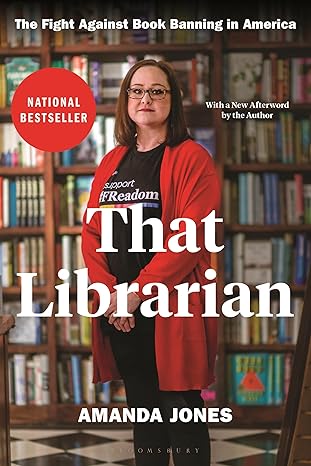 One of the things small town librarian Amanda Jones values most about books is how they can affirm a young person's sense of self. So in 2022, when she caught wind of a local public hearing that would discuss "book content," she knew what was at stake. She spoke out that night at the meeting, a decision that would make her a target for extremists using book-banning campaigns in their own crusade. But Amanda Jones wouldn't give up without a fight, in ‘That Librarian’ she tells her story.
Banning Books in America: Not a How-To by Samuel Cohen
 Banning Books in America features novelists on banning and being banned, arguments about the histories and politics of book banning, readings of banned books in national and international contexts, and responses to new legislation by anti-censorship advocates, teachers, and librarians. Together, these writers and educators provide a view from the trenches of the wars on reading. They offer, if not a single blueprint, models for how to think about what it means to ban books and how to fight back against the forces that would ban them.
This book shows that at the heart of this issue is the question of what books mean to people. Some Americans are determined to decide which books other Americans shouldn't get to read. Why these books? Why now? Anyone who seeks to answer these questions must examine the context, historical and current, in which Americans allow this to happen.
Just Plain Filthy: The Story Behind Book Banning's Trial of the Century by Anthony Aycock
 In 1975, the school board members of a small Long Island town did what they thought was a no-brainer: they ordered the removal of nine books from a high school library. The books included some classics – Richard Wright's Black Boy; Desmond Morris's The Naked Ape; Kurt Vonnegut's Slaughterhouse-Five – but that didn't matter to board chair Richard Ahrens, who called the collection "anti-American, anti-Christian, anti-Semitic, and just plain filthy." Maybe he thought the town was with him. Maybe he thought nobody would care. He certainly didn't think he would be sued by seventeen-year-old Steven Pico or that the case would end up before the United States Supreme Court, the first and only book ban dispute ever to do so.
The only one so far. Recent years have seen a surge in book challenges, and it is only a matter of time before another reaches the high court. Island Trees v. Pico ended in a loss for the school board, but not a resounding one. It left enough daylight for the current justices to reach a different conclusion. What was the court's ruling? How did it come about? What was the book ban climate in the 1970s and 80s, and how did it differ from today's? Just Plain Filthy is the first book to tell the complete story of Island Trees v. Pico, the flawed yet fascinating case that is the cornerstone of intellectual freedom in America. For now.
How to Defend Books and Why: Book Bans and How We Fight Them by Danny Caine
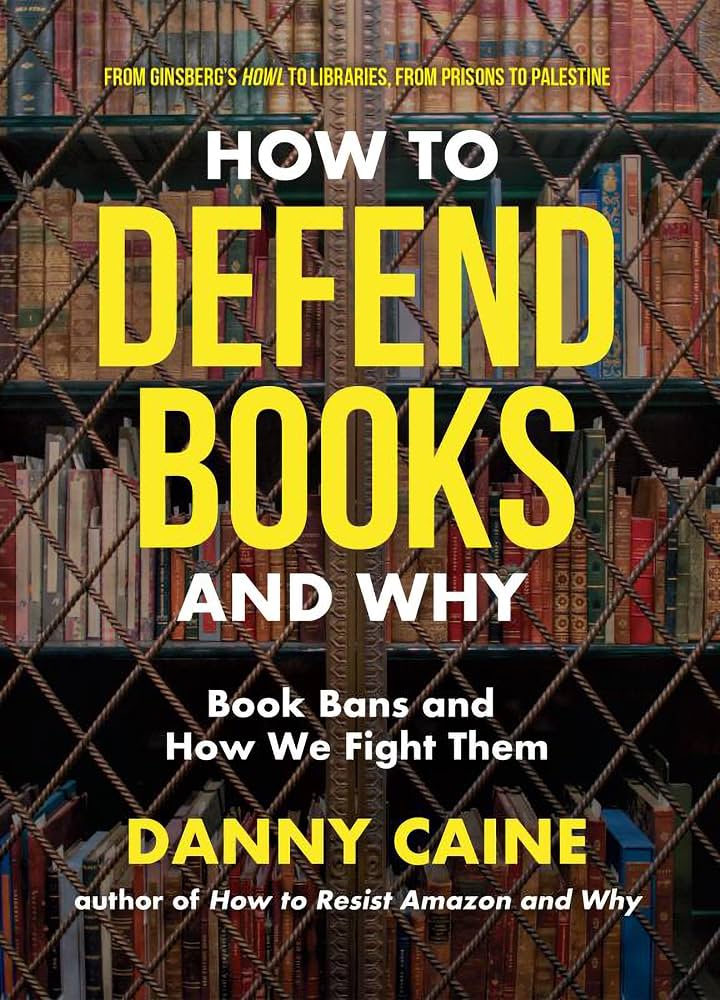 Fight back against censorship and empower your community with this close look at the book banning movement. In a moving, compulsively readable call to arms for readers everywhere, bestselling author Danny Caine offers an expertly crafted confrontation of attempts to reshape American culture through ban campaigns targeting schools, libraries, bookstores, and prisons, with the aim to silence marginalized identities in life and in literature.
From the first-ever banned books display at San Francisco's City Lights in the 1950s to the rapid rise of campaigns like ‘Moms For Liberty’, Caine charts the course of repressive censorship campaigns, along with the creative and sometimes unlikely activists who've stood up against them. Each chapter is based on a particular book-banning episode, bolstered by research and legal precedent, and concludes with helpful takeaways for further reading or resistance. Throughout, Caine approaches these heated issues with gentle openness harkening back to his work as a public school teacher and a bookseller. He emphasizes our collective responsibility towards art, free speech, and each other.
Erasing History: How Fascists Rewrite the Past to Control the Future by Jason Stanley
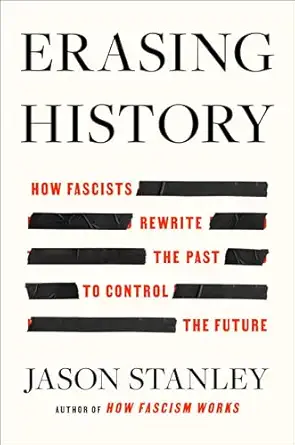 In authoritarian countries, critical examination of those nations' history and traditions is discouraged if not an outright danger to those who do it. And it is no accident that local and global institutions of education have become a battleground, where learning and efforts to upend a hierarchal status quo can be put to end by coercion and threats of violence. Democracies entrust schools and universities to preserve a common memory of positive change, generated by protests, social movements, and rebellions. In Erasing History, Yale professor of philosophy Jason Stanley exposes the true danger of authoritarian attacks on education, identifies their key tactics and funders, and traces their intellectual roots.
The ABA Right to Read Handbook: Fighting Book Bans and Why It Matters by American Booksellers Association
 The ABA Right to Read Handbook: A Reader's Guide to Fighting Book Bans will provide a comprehensive guide to resisting the epidemic of book censorship through local organizing and engaged citizenship. The Handbook is designed for the potential activist who may only have a few hours to spare each month. It identifies the causes, actors, motivations, and strategies of groups attempting to ban books across the country. It offers step-by-step guides for voting in a school board election, understanding a school board's policies, contacting elected officials, and more. It features interviews with free expression advocates and state-by-state profiles of local advocacy organizations. Finally, the content is organized into a playbook that will allow concerned readers to begin defending the right to read as soon as book bans arrive in their community.
A Danger to the Minds of Young Girls: Margaret C. Anderson, Book Bans, and the Fight to Modernize Literature by Adam Morgan
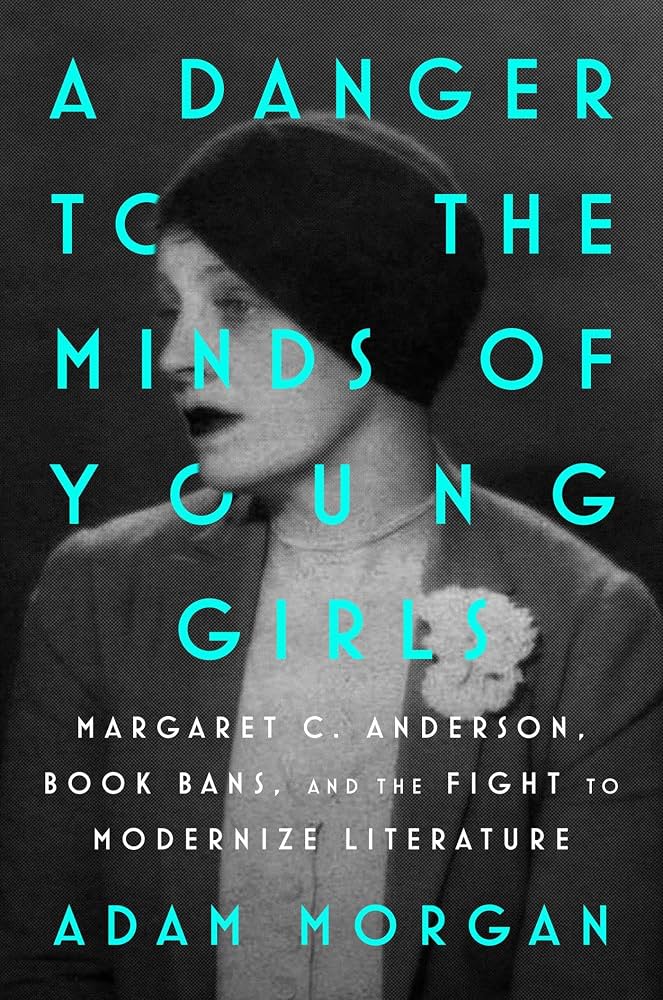 Already under fire for publishing the literary avant-garde into a world not ready for it, Margaret C. Anderson’s cutting-edge magazine The Little Review was a bastion of progressive politics and boundary-pushing writing from then-unknowns like T.S. Eliot, Ezra Pound, William Butler Yeats, and Djuna Barnes. And as its publisher, Anderson was a target. From Chicago to New York and Paris, this fearless agitator helmed a woman-led publication that pushed American culture forward and challenged the sensibilities of early 20th century Americans dismayed by its salacious writing and advocacy for supposed extremism like women’s suffrage, access to birth control, and LBGTQ rights.
Banned Books: The World's Most Controversial Books, Past and Present by DK
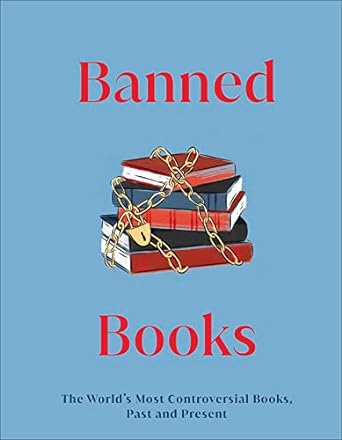 Censorship of one form or another has existed almost as long as the written word, while definitions of what is deemed "acceptable" in published works have shifted over the centuries, and from culture to culture. Banned Books explores why some of the world’s most important literary classics and seminal non-fiction titles were once deemed too controversial for the public to read – whether for challenging racial or sexual norms, satirizing public figures, or simply being deemed unfit for young readers. From the banning of All Quiet on the Western Front and the repeated suppression of On the Origin of the Species, to 1984, Fahrenheit 45, Catcher in the Rye and Huckleberry Fin, this must-have volume examines the astonishing role that some banned books have played in changing history.
Burning the Books: A History of the Deliberate Destruction of Knowledge by Richard Ovenden
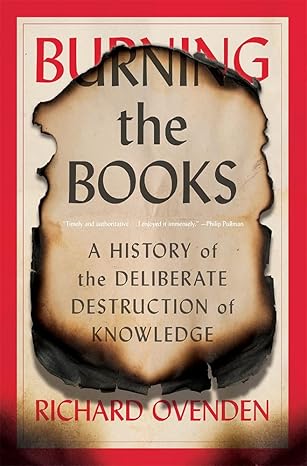 Libraries have been attacked since ancient times but they have been especially threatened in the modern era, through war as well as willful neglect. Burning the Books describes the deliberate destruction of the knowledge safeguarded in libraries from Alexandria to Sarajevo, from smashed Assyrian tablets to the torching of the Library of Congress. The director of the world-famous Bodleian Libraries, Richard Ovenden, captures the political, religious, and cultural motivations behind these acts. He also shines a light on the librarians and archivists preserving history and memory, often risking their lives in the process.
Orwell's Ghosts: Wisdom and Warnings for the Twenty-First Century by Laura Beers
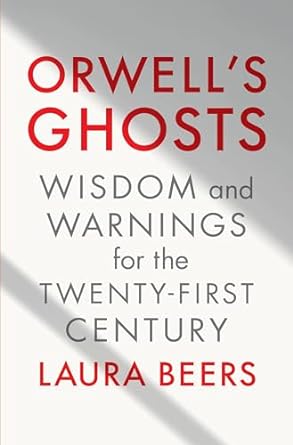 George Orwell dedicated his career to exposing social injustice and political duplicity, urging his readers to face hard truths about Western society and politics. Now, the uncanny parallels between the interwar era and our own―rising inequality, censorship, and challenges to traditional social hierarchies―make his writing even more of the moment
On Censorship: A Public Librarian Examines Cancel Culture in the Us by James LaRue
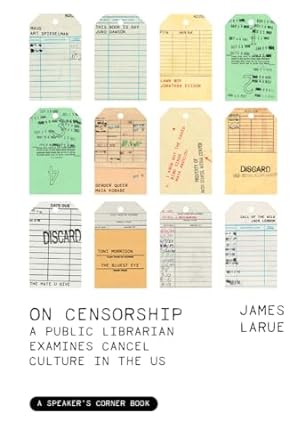 In America today, more books are being banned than ever before. This censorship is part of a larger assault on such American institutions as schools, public libraries, and universities. In On Censorship: A Public Librarian Examines Cancel Culture in the US, respected long-time public librarian James LaRue issues a balanced and reasonable call to action for all citizens.
The Education Wars: A Citizen's Guide and Defense Manual by Jennifer C. Berkshire & Jack Schneider
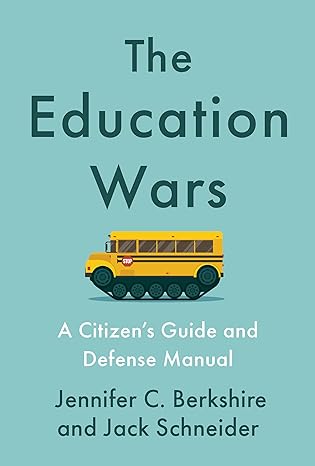 Culture wars have engulfed our schools. Extremist groups are seeking to ban books, limit what educators can teach, and threaten the very foundations of public education. What’s behind these efforts? Why are our schools suddenly so vulnerable? And how can the millions of Americans who love their public schools fight back? In this concise, hard-hitting guide, journalist Jennifer C. Berkshire and education scholar Jack Schneider answer these questions and chart a way forward.
Read Dangerously: The Subversive Power of Literature in Troubled Times by Azar Nafisi
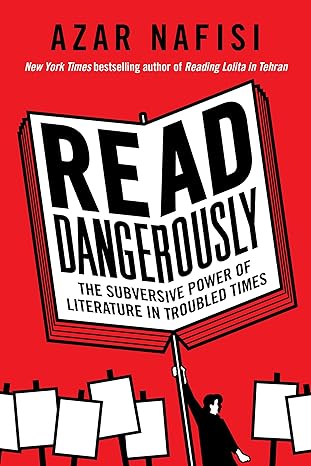 What is the role of literature in an era when one political party wages continual war on writers and the press? What is the connection between political strife in our daily lives, and the way we meet our enemies on the page in fiction? How can literature, through its free exchange, affect politics? In this galvanizing guide to literature as resistance, Nafisi seeks to answer these questions.
School Moms: Parent Activism, Partisan Politics, and the Battle for Public Education by Laura Pappano
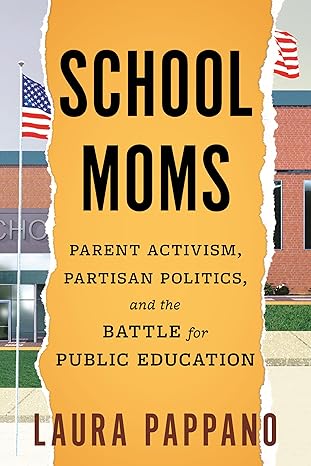 An investigative study of the far-right’s attack on education and an on-the-ground look at the parent activist battle, on either side of the debate, to control the future of public schools. In School Moms, journalist Laura Pappano explores the on-the-ground story of how public schools across the country have become ground zero in a cultural and political war as the far-right have made efforts to seek power over school boards.
They Came for the Schools: One Town's Fight Over Race and Identity, and the New War for America's Classrooms by Mike Hixenbaugh
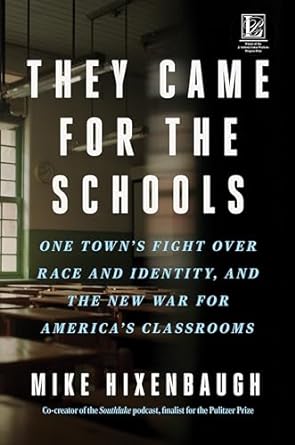 The urgent, revelatory story of how a school board win for the conservative right in one Texas suburb inspired a Christian nationalist campaign now threatening to undermine public education in America. They Came for the Schools pulls back the curtain on the powerful forces driving this crusade to ban books, rewrite curricula, limit rights for minority and LGBTQ students—and, most importantly, to win what Hixenbaugh’s deeply informed reporting convinces is the holy grail among those seeking to impose biblical values on American society: school privatization, one school board and one legal battle at a time.
The Book-Makers: A History of the Book in Eighteen Lives by Adam Smyth
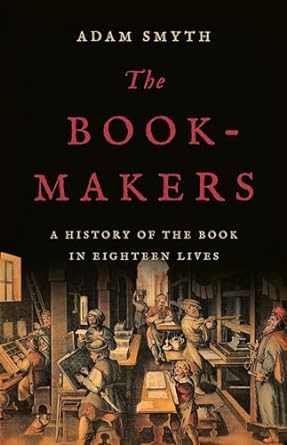 Books tell all kinds of stories—romances, tragedies, comedies—but if we learn to read the signs correctly, they can tell us the story of their own making too. The Book-Makers offers a new way into the story of Western culture’s most important object, the book, through dynamic portraits of eighteen individuals who helped to define it.
Knife: Meditations After an Attempted Murder by Salman Rushdie
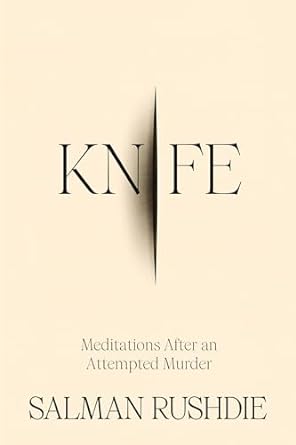 On the morning of August 12, 2022, Salman Rushdie was standing onstage at the Chautauqua Institution, preparing to give a lecture on the importance of keeping writers safe from harm, when a man in black—black clothes, black mask—rushed down the aisle toward him, wielding a knife. His first thought: So it’s you. Here you are. Knife is Rushdie at the peak of his powers, writing with urgency, with gravity, with unflinching honesty. It is also a deeply moving reminder of literature’s capacity to make sense of the unthinkable, an intimate and life-affirming meditation on life, loss, love, art—and finding the strength to stand up again.